
How Arrest Warrants Work in Horry County
An arrest warrant is court process that lets officers make an arrest once the required legal conditions are met. South Carolina magistrate law allows proceedings to begin on sworn information. A judge or magistrate then reviews the request under the governing rules. What happens next depends on the charge, the court, and the paperwork. Horry County publishes no public name-search roster of warrants. So a countywide search result can never replace contact with the issuing office. For outstanding-warrant questions in Horry County, the Sheriff's Warrant Division is a public route. The Horry Sheriff, Horry County Police, municipal police, and partner agencies may serve warrants, but the court or authorized process controls issuance.
Who May Seek a Horry County Arrest Warrant
South Carolina Code Title 22 governs magistrate criminal proceedings and arrest authority. Section 22-5-110 covers requests by law-enforcement officers, magistrate authority, courtesy summonses, and the endorsement of municipal warrants. A summons orders an appearance. It is not an arrest warrant. Missing the date can change the process, depending on the sworn statement and the law that applies. Horry County's magistrate directory splits into distinct geographic courts, including Conway, Aynor, Green Sea/Mt. Olive, Loris, Myrtle Beach, Little River, and Surfside Beach. The court named on the document is the place to ask what was issued and where the record sits. That same magistrate statute describes how a law-enforcement request and a municipal warrant move forward.
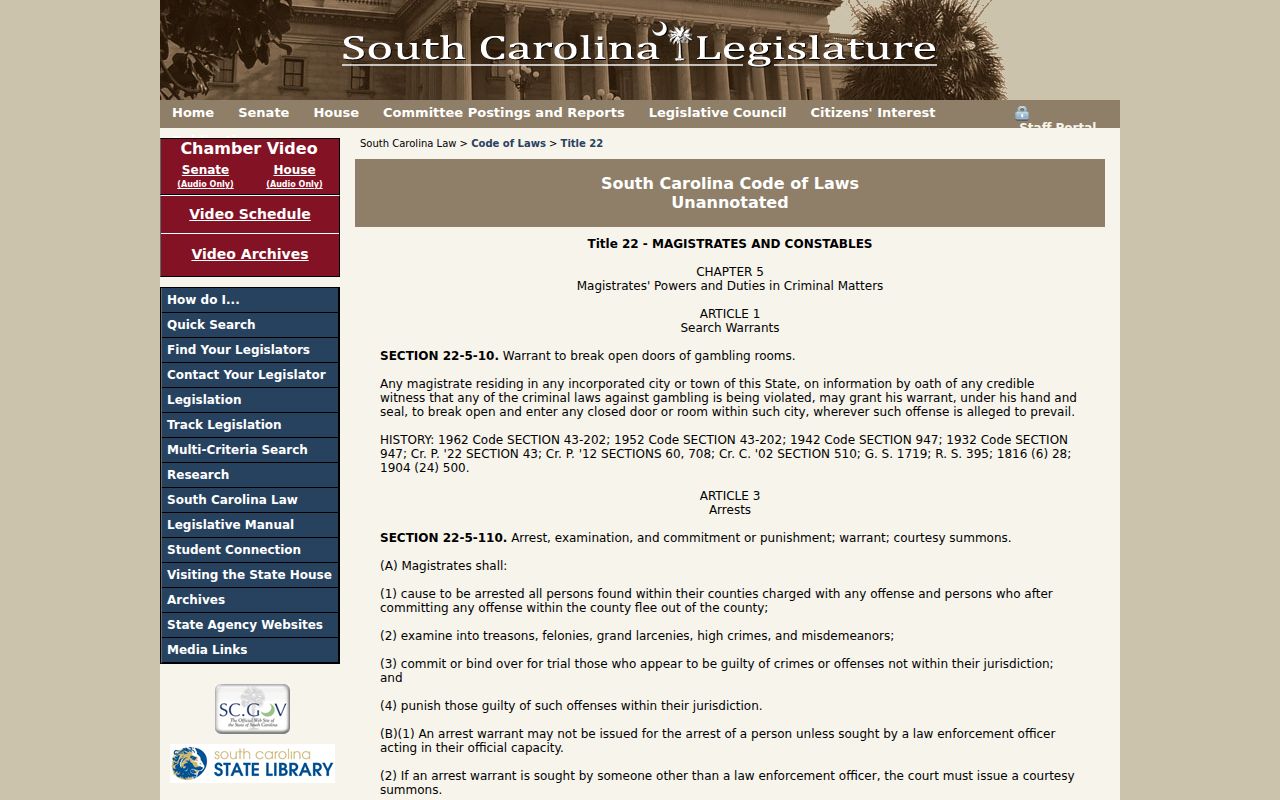
Read the current statute with the court’s instructions for the specific case.
Horry County Arrest Warrant Probable Cause
Probable cause means the facts support a reasonable belief that a crime occurred and that the named person may be connected to it. South Carolina statutes set the process for sworn information and magistrate review. No public page can decide whether a particular affidavit meets that standard. The court or counsel can explain the process for one case. Horry County's court directories list magistrate and municipal courts separately. Check the issuing court printed on your paperwork. Ask there where the record is held and whether a public docket entry exists.
Arrest Warrants: What They Contain
Blank official court forms show the administrative details that can tie a warrant to its case: court and county, case number, alleged offense, judge, bond, service location, return, and appearance information. The exact record varies. A public Horry County case result may not show every field, and a sealed or protected matter may not appear online at all. Never copy personal identifiers from a warrant form into a public post.
| Issuing court | Identifies the court to contact about the order. |
|---|---|
| Case or charge | Connects the process to the underlying proceeding. |
| Bond or release terms | Shows conditions that must be confirmed with the current order. |
| Service return | May describe an officer’s attempt or service action. |
A Horry County record field shows what was entered, not the current status of a warrant.
How Warrants Get Served in Horry County
Filing and serving criminal warrants is a stated function of the Horry Sheriff's Office. Its Warrant Division also works with the FBI, ICE, U.S. Marshals, and other state and local partners. Horry County Police Support Services lists separate records and warrant contacts. A city police department may handle service inside its own jurisdiction. The right agency depends on the issuing court and the process. For an unknown Horry County warrant, HCSO publishes (843) 915-8347. HCPD lists Records at (843) 915-8344 and a warrant contact at (843) 915-8247, while a second directory lists a different “Warrants” line. The HCSO Warrant Info page offers a self-check route. Confirm the correct HCPD unit before relying on any number.
Horry County Arrest Warrant Service Roles
Issuance and service are separate steps. The court authorizes the process. The Sheriff, Horry County Police, municipal officers, or a partner agency may then serve it. Horry County's own directory keeps court records apart from law-enforcement contacts. If a document names a city police department or a federal partner, that office may hold a service record the court docket lacks. Ask the court to confirm the case. Bring service questions to the proper law-enforcement office. A blank Public Index result does not establish whether an order was served or remains active.
Arrest Warrants, Summonses, and Bench Warrants
An arrest warrant must meet criminal-process requirements. A bench warrant usually follows a missed court appearance or a violation of a court condition. A summons simply tells a person to appear, though failure to appear can lead to further process. A traffic citation and a search warrant each serve different purposes. In Horry County, the issuing court and the document's own wording show which route applies.
| Document | What it does | Horry first contact |
|---|---|---|
| Arrest warrant | Authorizes arrest under the governing process | Issuing court or Warrant Division if unknown |
| Bench warrant | Addresses a missed court duty | Court tied to the missed appearance |
| Summons | Sets a required appearance | Court listed on the paper |
| Search warrant | Authorizes a search, not a person’s arrest status | Issuing court or agency |
Never assume a Horry County ticket or summons turned into a warrant unless the court itself confirms it.
Horry County Arrest Warrant Phone Route
Horry County takes a phone route to warrant questions. The official Horry Warrant Info page lists a Warrant Division number for questions and a separate line for anonymous tips. There is no public search form, no warrant list, and no posted update date. The county app promotes other services, but warrant lookup is not one of them. Those are limits on what you can browse, not proof that no warrant exists in Horry County. One more caution: the tip line is not the place to ask about your own warrant. Call the dedicated warrant number and ask which court or agency controls the matter. Horry notes that its Sheriff works with federal partners, so a case touching another agency may need a separate contact.
Handling an Arrest Warrant in Your Name
Let the case papers show which court issued the warrant. Then talk with the clerk or a lawyer about what Horry County requires, whether that is a surrender, a bond hearing, a new date, or another court order. The Public Defender office lists (843) 915-5385 for eligibility and service information. Nothing here promises a recall, bond, or release.
Payment warning: Horry states the Sheriff does not collect bond by phone. Verify any amount and payment instructions through an official court or county number.
Questions about bond go to the Magistrate's Office at J. Reuben Long. Payment can be cash, money orders, or major credit cards. Personal checks are not accepted. Exact-cash rules can apply, so confirm the current amounts before you go. The county's official Booking/Releases page walks through the in-person payment route. Posting bond is not a dismissal, and a receipt does not always recall the active Horry County warrant.
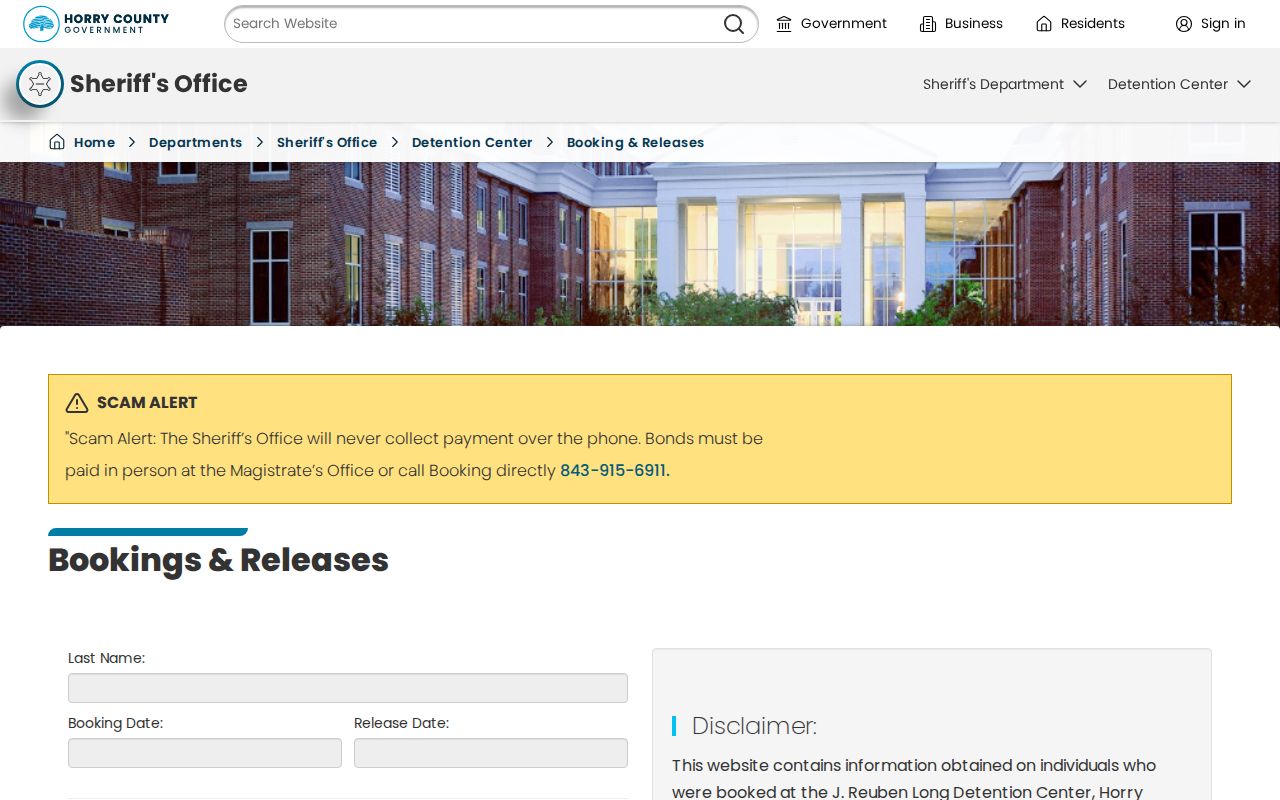
If a warrant call names you in Horry County, hang up and pull the number from the official Horry site yourself. Never dial a number a stranger reads to you.
Horry County Arrest Warrants and Federal Boundaries
Some warrant questions reach past Horry County altogether. Federal matters in this area run through the District of South Carolina's Florence division. PACER is the tool that pulls public federal case dockets. The U.S. Marshals and the Carolinas Regional Fugitive Task Force play separate roles, each with its own investigations and service duties. None of that appears in a county Public Index search. Sealed federal material can stay hidden even inside a docket. HCSO names these federal partners on its end, but it does not claim to confirm every federal warrant. Read the paper in front of you. Identify the court or agency that issued it, then contact that office or a lawyer. An empty PACER search, like an empty county search, is not a legal determination that no federal process exists.
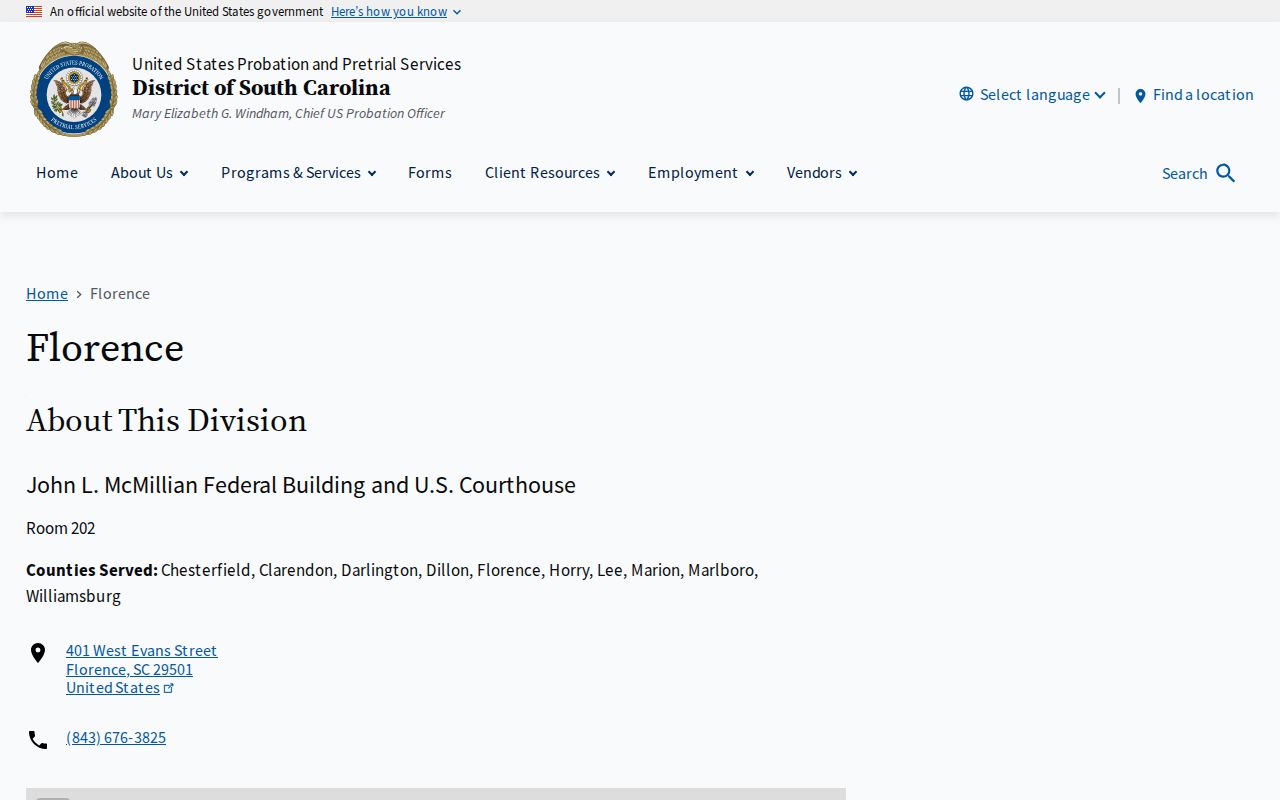
Use the issuing federal agency, rather than assuming a county court controls the matter.
Horry County Arrest Warrant Records Requests
The Sheriff’s monthly report tracks warrants received, served, and unable to locate as workload categories. Those historical counts are not a present list. A request for an existing, non-exempt policy or aggregate service record may go through Horry Public Information under the South Carolina Freedom of Information Act. Ask for a date range and existing record; do not request a compiled list of private names.
The issuing court remains the best route for case-specific status. For the full county court map, bond route, and records limits, see the Horry County warrant records overview.